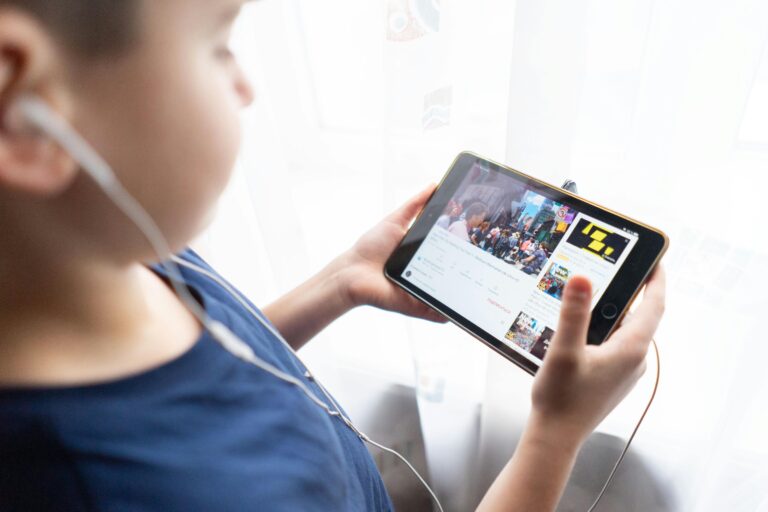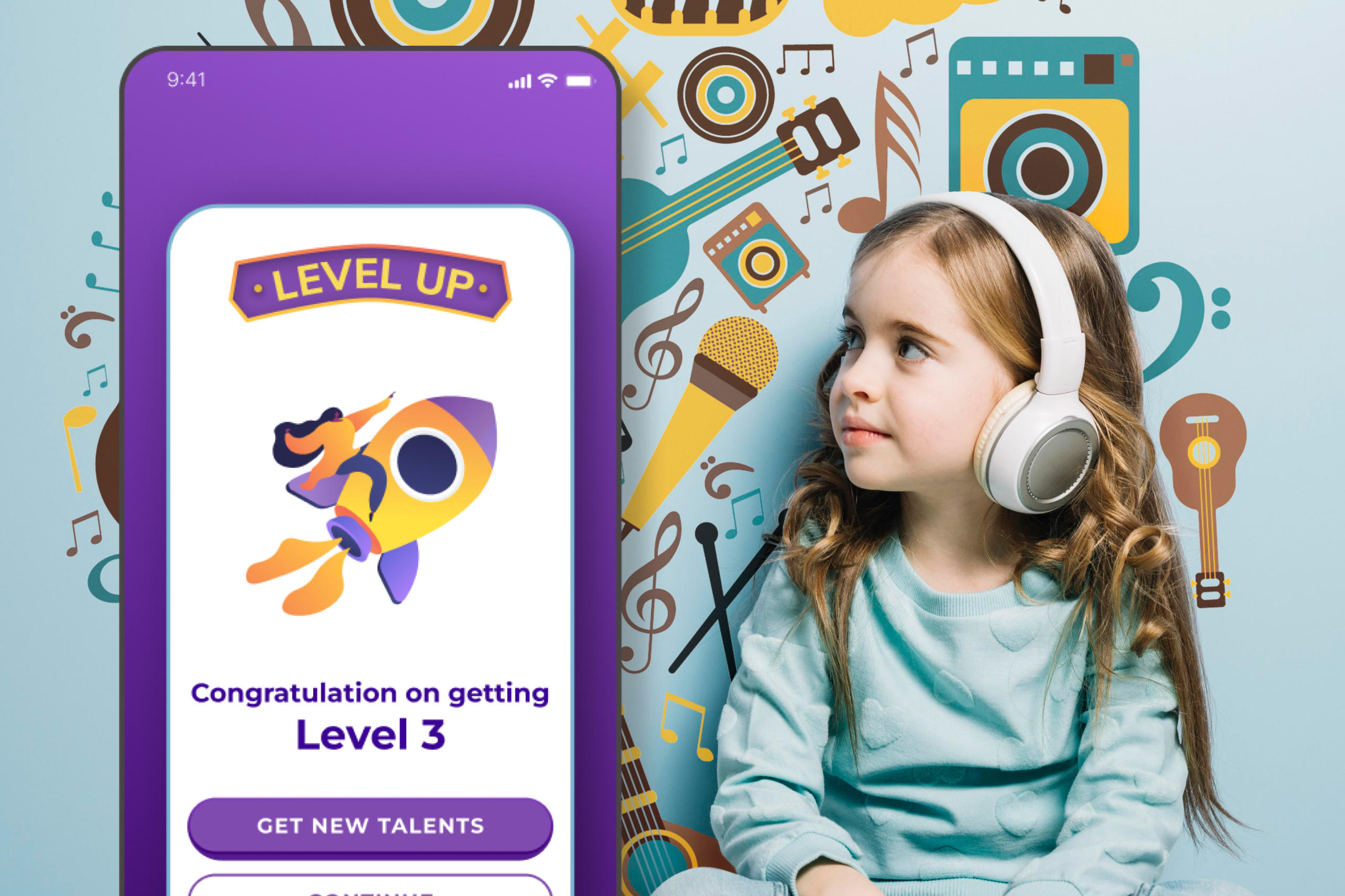
Music learning is traditionally associated with long hours of repetition and strict discipline. But what if one could rethink this approach to practice altogether, making it not only useful but genuinely engaging? Here comes gamification-a methodology that allows the inclusion of game elements into the educational process, transforming tedious exercises into a fascinating journey. This approach blends gamification, piano practice, badges, challenges into one cohesive experience that uses engagement tactics, points mechanics, and motivational loops to drive fun learning. Even a free app learn piano can incorporate reward design and practice gamification to boost user retention.
A sense of progress and involvement these elements create. When each new lesson is perceived specifically as a stage of a game, not a routine task, motivation multiplies. Seeing practice not as an obligation but as an opportunity to embark on an exciting quest, children and adults begin.
Psychology of Engagement Why Motivation and Discipline Gamification Helps Develop
The process of piano immersion faces many people with the known problem: sooner or later, fatigue and loss of interest will appear. Gamification implemented in Talented is intended to break this pattern; it focuses attention on the psychological mechanisms of motivation. What’s the secret of engagement?
- System of rewards and achievements: The feeling of progress, underlined by visual and audio signals of success, stirs the brain to produce dopamine responsible for the feeling of pleasure and wish to move further.
- Clearly specified goals: instead of the abstract “practice”, Talented has particular tasks with a degree of difficulty involved which activates holistic thinking and sustains concentration.
- Real-time feedback: Mistakes are not left unnoticed but are corrected in an instant, so that the learner can see their own achievements and areas for development.
Besides, gamification supports discipline by such elements of competition and social interaction as leaderboards and joint challenges that develop a community where every participant feels support and healthy competitiveness.
So, the psychological base of Talented gamification is built on the combination:
- Motivation management through rewards;
- The clarity and attainability of the goals;
- Immediate and positive feedback;
- Integration of social learning factors.
This practice process, which these keys make, is not only systematic but emotionally rich, turning every lesson of each day into a real adventure. These game elements and engagement tactics are central to the Talented app approach, reinforcing motivational loops that keep learners returning.
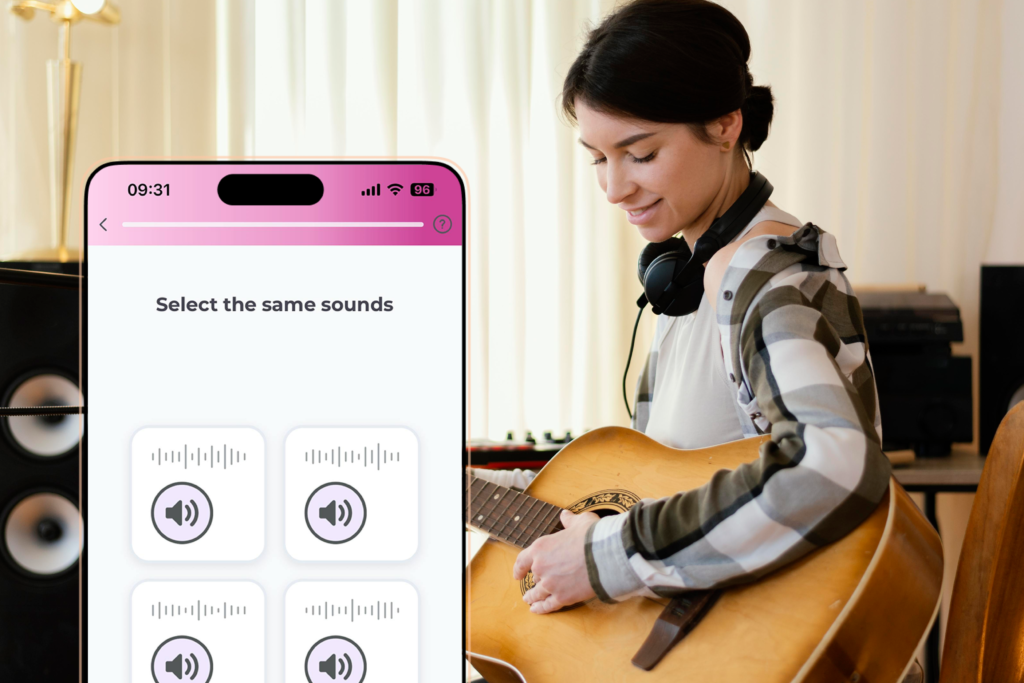
Key Tools and Mechanics of Talented for Increasing Lesson Effectiveness
The core of the Talented platform includes a set of tools created with an emphasis on game mechanics, which sharply differentiates it from traditional teaching. Among them, especially noticeable are the following:
- Progress bar and difficulty levels: For the user, development is visually reflected. The progress bar will keep him motivated, while the levels allow growth not to be overwhelming.
- Timed activities: An element of adrenaline that draws learning and playing closer, triggers reaction, and helps your focus on the accuracy of performance.
- Points system and virtual rewards: The student, while collecting points for successful exercises, records the results but also builds a collection of achievements that motivates him to participate more and more.
- Analytics and skill breakdown: Talented tracks weak spots, providing detailed reports that enable learners to then make improvements where needed.
- Interactive lessons with elements of storytelling. The emotional response is greatly enhanced through involvement in a game plot: the student does not simply perform exercises but completes quests and missions.
- Social features: Successes to share, competing with friends, or participation in group events spur continued interest and consistency in practice.
All of these tools put together create an atmosphere where traditional notes and exercises are not just skills but achievements in the game. Talented knows how to awaken the thirst for improvement through the careful construction of game elements, which makes piano learning effective and engaging. This is practice gamification through rewards system choices, reward design, points mechanics, and challenge modes that drive user retention. gamification; piano practice; Talented app; badges; challenges
Success stories real user stories that changed their practice approach
It is not only the mindset that changes; the results change when classical practice turns into a game. Dozens of users have already shared their impressions on the Talented platform and proved that gamification really is able to change the usual learning process. Several real stories below illustrate how the new approach helped students improve their skills and gain motivation.
- Alexey, 14 years old, beginner pianist
“Routine lessons seemed-like before-sit, repeat the same thing, and boredom quickly comes. For the first time, with Talented, I felt excitement. Points, levels, and even small rewards come with each completed exercise. Competing with friends turned out to be an added incentive-I want not just to play, but to play better than everyone!” - Maria, 29 years old, amateur who took a long break
“After ten years of break, I came back to piano and was afraid that much was forgotten. Return to form with Talented’s gamified tasks became easier: the daily challenges and interactive feedback made the process more lively without fear of failure. - Dmitry, teacher and platform user
“A huge plus for me as a teacher is to see students engaged and not postponing lessons. Talented helped them to see practice as an adventure where every step is important and rewarded. Besides, the platform offers analysis of strengths and weaknesses that help to adjust the program individually.”
What unites all of these people?
- Engagement instead of apathy, through gamification. Lessons turn interactive with points, ratings, and tracked visual progress.
- Continuous motivation. Interest is maintained long-term by challenges, tasks of growing difficulty, and small achievements.
- A sense of involvement and support. The possibility to communicate with other users, and thus to compare the results, creates team spirit and a healthy competition effect.
Only a small part are these success stories that appear thanks to Talented. Not only the method of learning music does this platform change, but also the attitude towards practice itself, turning usual lessons into a true journey to mastery. These narratives show achievement tracking at work, from badge economy incentives to level progression and competitive play.
How gamification changes consistency and creative thinking
The development of musical skills and creative thinking, however, is not a linear process and not always predictable. As developers of apps, with the introduction of game elements into learning, we see the whole nature of this path change-more dynamic, more productive.
First, gamification contributes to the creation of stable habits. It can turn consistency-a key to mastery-into a desirable practice rather than an obligation-by turning tedious exercises into mini-games with results and rewards. Contributing directly to this is:
- Activity regularity: more often users return to practice, because instant feedback they receive and progress they see.
- Variety in engagement duration: There is variety in tasks and levels of difficulty that maintain the interests of learning.
Second, creative thinking is stimulated. Music as a means of expressing emotions gives the chance to experiment with melodies and rhythms without the fear of making mistakes by using all the opportunities provided by interactive means. Our application has involved the following to implement this:
- The option to create personal musical fragments.
- Interactive exercises to support improvisation.
- Real-time feedback allows the user to hear and understand their mistakes.
Achievements and challenges spur a system that encourages one to go beyond the usual. With every new achievement, one makes another small step toward self-confidence in his own abilities and an expansion of creative horizon boundaries.
Emphasize three major aspects in which the digital approach enhances musical capabilities:
- Instant feedback: Mistakes are immediately noticed and thus corrected much faster.
- Content personalization — adaptation of tasks in accordance with level and style of the learner.
- Competitive element and community — an opportunity to share the results and learn from each other.
In other words, the gamification of piano mastering makes it not only easier but also changes the attitude towards music. They start to think differently, looking at the game not as entertainment but as a creative process and a means of self-expression. Our experience confirms: a powerful tool technology is in the hands of both beginners and advanced musicians. And its main virtue—it awakens in everyone the desire to create, not just to learn. gamification; piano practice; Talented app; badges; challenges
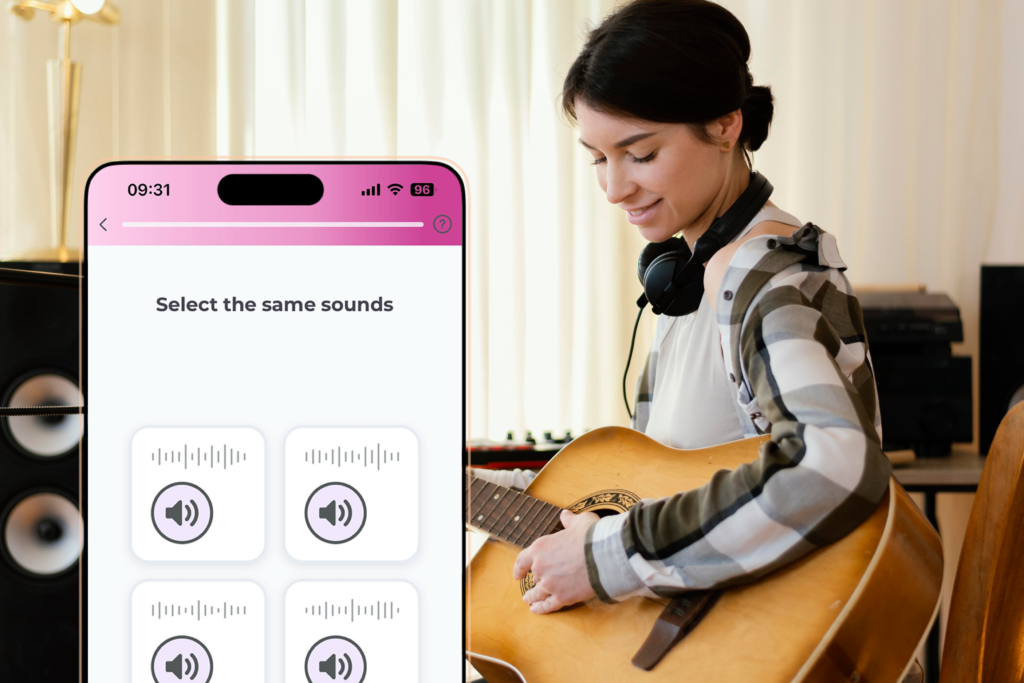
Future and Prospects Where is Music Education with Digital Technologies Heading
Digital technologies transform music education, change the established approach, and open new horizons. In the development of creative skills, one would say that an intrinsic part is gamification. The Talented platform is a very bright example of such a movement forward. What does tomorrow hold for us? What will music education look like in the near future? Let’s consider the key directions.
Hybrid Learning Models
Therefore, it will be able to take into consideration the needs of each student through the elaboration of individual trajectories of development because face-to-face lessons will be combined with online gamified platforms. Such an approach will balance discipline and creative freedom.
Artificial Intelligence and Adaptive Technologies
With the integration of AI in the learning process, automatic analysis will be enabled instantaneously, with an adjustment in task difficulty to keep the optimal challenge level at all times. The beginning of this process can already be seen at Talented, and this will over time become the standard.
Social and Competitive Elements
The motivation will be increased by the interaction with other musicians through virtual communities, collaborative projects, and rankings. Contests and challenges will unite and drive consistency among participants when integrated into the daily practice.
Development of More Multimedia Resources
With the deeper realization of music through enabling technologies like augmented reality, 3D visualization, and interactive vocalizations, education will be a multisensory adventure.
Personalization on a New Level
Thus, automated emotional state trackers, biometric data, and adaptive rhythms will enable creating unique software solutions according to the users’ mood and physical condition.
Thus, the music of the future is not just sounds and notes but also the innovations which make the learning process conscious, engaging, and effective. At the head of all this movement stands Talented, opening a way for new generations of geniuses for whom the piano is not just an instrument but a platform of creativity and growth. In this world, where technology and art are connected so closely, the limits of possibilities widen, and each student gets a chance to turn from just a performer into a real master of his or her craft. This evolution keeps challenges fresh, cultivates badges with meaningful reward design, and ensures the Talented app continues leading with practice gamification that supports long-term user retention.